
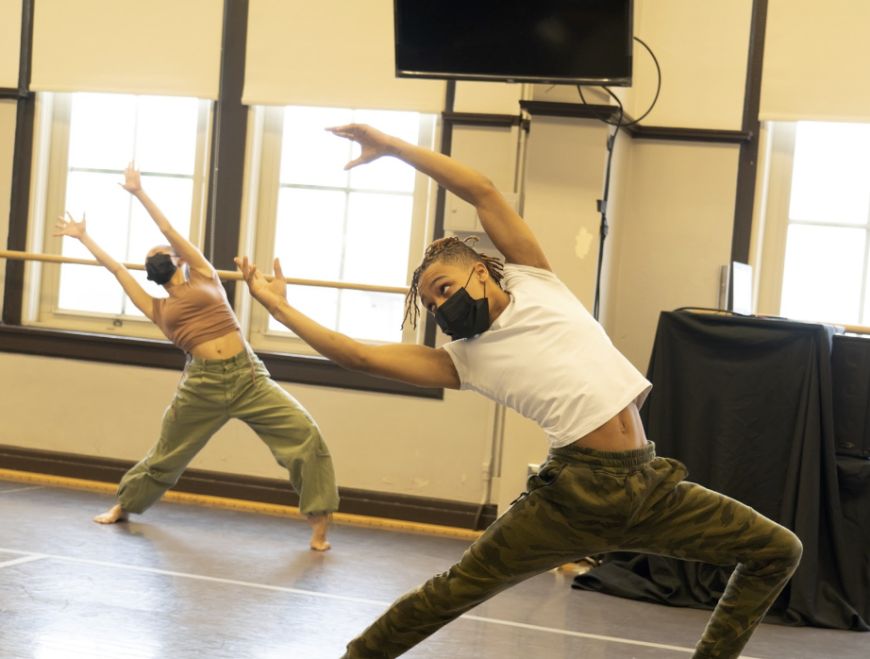
Dance Department Scope & Sequence
Freshmen
- Classical Ballet Technique (Novice, A, B, C, D, E,)
- Body Conditioning/Pointe Prep (I, II)
- Modern-Horton Technique (A/B)
- Tap
- Introduction to Dance
Sophomores
- Classical Ballet Technique (Novice, A, B, C, D, E,)
- Develop Virtuosity / Formally Men’s Technique
- Horton Technique (B)
- Graham Technique (B)
- Introduction to Yoga
- Wellness for Dancers
- Spanish/African Dance
Juniors
- Classical Ballet Technique (Novice, A, B, C, D, E,)
- Develop Virtuosity / Formally Men’s Technique
- Horton Technique (C)
- Graham Technique (B)
- Hip Hop
- Personal/Professional Development
- Contemporary (Jazz/Modern)
Seniors
- Classical Ballet Technique (Novice, A, B, C, D, E,)
- Develop Virtuosity / Formally Men’s Technique
- Senior Horton
- Senior Graham
- Senior Repertoire
- Senior Open Studio
Dance Department Course Descriptions
Classical Ballet Technique Novice Ballet Technique Novice is an introductory course to the fundamentals of classical ballet. Students will develop basic vocabulary and understanding of proper alignment. Emphasis is placed on finding and utilizing the turn out muscles, articulating through the legs and feet and building strength and tone. Clarity of movement and music are stressed.
Classical Ballet Technique A Ballet Technique A is a continuation and progression from the previous level, Novice Ballet. Students will further develop skills in classical ballet technique with an emphasis on strengthening the body, increasing flexibility, and building upon movement vocabulary. Emphasis will focus on structural alignment, clarity of movement, musicality, and self-correction. Particular importance will be placed on developing classical line and connection of movement through the repetition of fundamental exercises and the introduction of enchainments. Students will be required to complete occasional journal assignments.
Classical Ballet Technique B Classical Ballet Technique B is a continuation and progression of Ballet A. Students will begin to be introduced to more movement vocabulary and longer combinations. Emphasis will be on building endurance, building strength, and moving at quicker tempos.
Classical Ballet Technique C Ballet Technique C is a continuation and progression of Ballet B using Contemporary nuances as the foundation of the movement quality. Students will develop and increase vocabulary while striving to improve strength, flexibility, and understanding of movement. Proper alignment, musicality, and clarity of execution are emphasized. Students will begin to pick up movement quickly and increase stamina to complete longer exercises without stopping.
Classical Ballet Technique D Classical Ballet Technique D is a continuation and progression of Ballet C. In addition to the development of strength, flexibility, understanding of movement, proper alignment, musicality, and clarity of execution. At this level, the class is designed to challenge the dancer in preparation for the possible advancement to Ballet E.
Classical Ballet Technique E Classical Ballet Technique E is the highest level of ballet technique at ChiArts and is a continuation and progression of Ballet D. It is assumed at this level that students have acquired, and practiced work covered in previous levels. Students will refine vocabulary while striving to increase strength, flexibility, coordination, and artistry within their movement. Proper alignment, musicality and clarity of execution are emphasized. Students are expected to pick up movement quickly, dance with speed and definition while exhibiting control. At this level, corrections should be applied and retained rapidly. Ladies will be expected to take class on pointe at least two times per week. Ballet E is designed to help develop the skills needed in order for a student to pursue dance post-graduation.
Beginning Pointe (after-school) Beginning Pointe focuses on building strength, clarity, and pointe vocabulary. Students will be introduced to basic fundamental principles, including a variety of piques, relevés and pirouettes. Emphasis will be placed on proper alignment of feet and legs through strengthening the body, working correctly through the shoe, increasing flexibility for proper execution, and balance.
Intermediate/Advanced Pointe (as part of Ballet D – E, also offered after-school) Intermediate/Advanced Pointe is a continuation and progression of skills learned in Beginning Pointe. Students will continue to work on strength and articulation with increasingly difficult steps. Emphasis will be placed on quality, clarity, and ease of movement.
Develop Virtuosity/Formally Men’s Technique This course emphasizes developing additional strength and agility for classical ballet. Focal points include multiple pirouettes, increased elevation, increased vocabulary for jumps including specialized grand allegro, and traveling through space.
Horton Technique A At the Novice level, students are introduced to the basics of the Horton Technique. Focal points include spinal articulation, line, energy, shape and rhythm. Alignment and correct form are studied along with the movement vocabulary of the Horton Technique.
Horton Technique B Students are introduced to intermediate level studies, fortifications and preludes from the Horton Technique. Focal points include contraction and release, movement dynamics, coordination and clarity of movement and more subtle musicality.
Horton Technique C Horton Technique C incorporates everything learned in A & B. At this level a focus on movement phrases and artistic expression is emphasized and practiced.
Senior Horton Senior Horton is a prep class for the next level of training after high school. The fundamentals of Horton are refreshed in order to prepare the dancers for college and pre-professional level auditions.
Graham Technique B The main objective of this course is the exploration of the fundamental principles, practices, aesthetics and vocabulary of the Martha Graham modern dance technique. The technique is a system of movement based on the principles of contraction, release and spiral. Graham technique heightens awareness of the body and its relationship to space by stressing the use of weight in movement patterns. It builds physical strength, teaches dancers to move from the center and furthers their understanding of alignment. The study of Graham technique requires discipline, patience and commitment to a consistent personal practice in order to build the strong foundation needed for well-rounded dance training.
Senior Graham Senior Graham is a prep class for the next level of training after high school. The fundamentals of the Graham technique are refreshed in order to prepare the dancers for college and pre-professional level auditions.
Contemporary Modern Contemporary Modern provides an opportunity for students to further explore and challenge themselves artistically, technically, and creatively. Choreography and class components become increasingly complex and different movement qualities are used to give students experience in contemporary work. Focus is given to the quality and intention of the movement and the course will emphasize detailed work. This course is designed to complement previous training to produce a well-rounded dancer.
Contemporary Jazz Contemporary Jazz has a foundation in jazz technique and stylization of movement. We then move to see how jazz is used in contemporary dance. It involves a lot of detailed work, asking the dancers to investigate themselves in order to become artists. The quality and intention of movement become more the focus of the class. The dancers push past traditional boundaries and vocabulary. The material worked through is highly textured, dynamic and graphic. Dance composition and creativity is addressed with specific task driven assignments. One to two new works are created with the input of everyone in the room, and direction from the instructor.
Spanish/African Dance This one-semester course introduces students to a variety of dance styles inspired by traditional dances from various countries. Students will be introduced to a range of musical and dance structures and sequences. Focus will be on style, rhythm, and changing spatial formations.
Body Conditioning/Pointe Prep Body Conditioning/Pointe Prep is designed to help students build the strength, endurance and flexibility needed for dance. Emphasis is placed on alignment and correct usage of the body. Students will develop an awareness of different muscle groups and work towards utilizing them effectively and efficiently.
Tap An introduction to the rich history and lively practice of Tap Dance. The primary focus of this class is to equip students with the fundamentals of the craft that will connect them with the infinite language of rhythm. Through our practice students will explore and learn about Tap pioneers and how to apply their skills of rhythmic understanding to other dance techniques/styles outside of Tap Dance.
Hip Hop is culture showing up in many forms of Art! This course will focus on foundations and origins of hip-hop dance and street dance culture! The course examines the journey into today’s current definitions of hip hop and freestyle dance. The primary goal is to deepen the appreciation of Hip Hop evolution, specifically the dance genre of Hip Hop culture, and explores movement through dance instruction, agility drills, choreographed routines and peer engagement. Learn through video learning/YouTube assignments and group dance projects. Students will be challenged, and encouraged, to understand historical knowledge of hip-hop and how it applies to today’s hip hop dance culture. Hip Hop is the umbrella, or epicenter, for art, music, dance, literature, identity, fashion and politics. Through studying movement, we will begin to understand the art, culture, and politics that cultivated the birth of Hip Hop. Discovering the aesthetics and the musical styles that made Hip Hop music possible.
Introduction to Yoga This course introduces students to the ancient Indian discipline that seeks to foster personal growth through physical, mental and spiritual practices. Students will learn fundamental yoga poses (asana), breathing techniques (pranyama) as well as basic meditation techniques to promote health, relieve stress and increase focus and concentration. Through a disciplined practice students will improve their muscular strength, flexibility, body and mental awareness while learning practical tools to cope with the stress of everyday life. While the course will mainly focus on physical practice, students will also be introduced to the history and philosophy of Yoga.
Senior Repertoire This senior level class is focused on preparing students for the professional performing environment. Students will work with choreographers in solo, duet, and group work that both increase their technical execution of performance work and also enhance their artistic performance of the choreography. Students will prepare for auditions, rehearse choreography, and learn basic tools for dance composition.
Introduction to Dance This course is an opportunity for students to explore the world of dance through a different means of study. In Intro to Dance, students will delve further into vocabulary and terminology, examine historical correlations and contexts for dance, and research the development of the art form throughout time, both nationally and globally.
Wellness for Dancers This course focuses on preparing dancers to care for and maintain healthy bodies during their dance training. Students will examine anatomy as it relates to dance and develop an awareness of proper alignment and usage of the body. Injury prevention and identification methods along with strategies to balance the physical demands of dance will be studied.
Personal/Professional Development This development course empowers students intellectually, socially, emotionally, and politically by using cultural referents to support student construction of knowledge, skills, and attitudes. This course leverages students’ lived experiences, backgrounds, and knowledge to authentically engage students in meaningful learning. As young dancers are learning movement, they will simultaneously investigate who they are as young people. The class will also focus on the development of a dancer’s professional career. Topics of study include preparation for auditions, resumes, bios, headshots, and performance. Students may also research dance companies and employment opportunities, both nationally and internationally. This course is designed to expose students to additional components necessary to pursue a professional career as well as alternative careers in the field of dance and beyond.
Senior Open Studio Senior Open Studio is a course designed specifically for seniors in the Dance Department. Building upon Professional Development I, this year long class is intended to help prepare students for the requirements of senior year and beyond. Connecting to the work in Senior Repertory, units address aspects of the dance world outside of the technical training the students are receiving and allows them to explore additional ways to be involved in the arts. Senior Seminar also supplements the students’ dance training through regular strength and stamina training. The course addresses not only the physical abilities needed for dance, but also the health and fitness tools needed to sustain overall wellness in their art form. Students will engage in topics and assignments designed to help them better understand opportunities in the arts and to better understand and articulate their personal goals and intentions.
COURSE CONTENT AND SCOPE & SEQUENCE ARE SUBJECT TO CHANGE